|
the "Complan" vs the
"Minox"
Lens
If there is a difference in performance, it is
...
- .... more a "feeling" than overwhelming
visual experience.
- .... probably not evident in enlargements
less than 8x10 inches.
- .... perhaps only visible in prints made on
RC paper (sharper images than fiber paper).
- .... not demonstrable with film of lesser
fineness, (T-Max 100, etc., even AgfaPan 25)
- .... dependent on a steady camera support in
the form of a tripod, sandbag, or youth.
- .... directly related to critical focus.
The list contains items, such as tripods and
very slow films, which largely defeat the purpose
for which we love the little gem, and thus are
rather irrelevant. So, why do you carry an 8x11mm
Minox? If your reason is similar to that of the
inventor, the difference between the two lenses is
of little interest.
The
photographer is responsible for a MUCH greater loss of quality than the
camera!
|
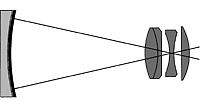
The Complan lens of the early models
featured a compromise between lens
correction and film curvature to achieve
edge to edge sharpness. This is only
possible if a film gate presses the film
into the exact position needed.
The "Minox" lens abandoned this design
in favor of a fully corrected lens and
flat film gate.
|
So, finally, after years of wondering, I loaded
a B, "Complan" C, "Minox" C, LX, and just for fun
an ECX with Fuji Super HR film, loaded up the
Tiltall tripod, and went to the harbor, the hills,
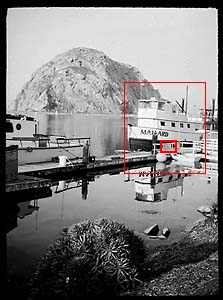
and the RxR station. Results from the three
locations seem to be well summarized by the sign in
this harbor scene.
|
|
|
With the enlarger set to make an 11x14
inch print from a 8x11 mm Minox negative,
a portion of the full frame image at the
left was printed. The print, which is
approximately a 32x enlargement was then
scanned using a 600 sample per inch
setting.
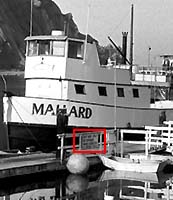
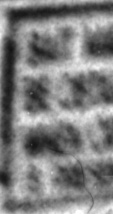
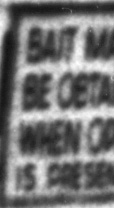
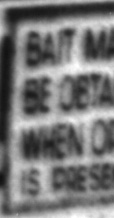
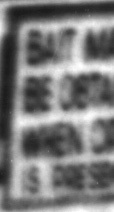
A small sign (outlined in red) was then
isolated and shown below without
resizeing. If your monitor displays 72
pixels per inch, as mine does, the images
displayed represent another 8.33
enlargement for a total enlargement factor
of 269.
|
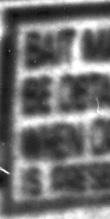
I have tried to match the prints below, for
density, as much as possible. You may draw your own
conclusions.
The results provided by the ECX at a distance
well beyond its intended range are, to me,
remarkable, even more so in view of the fact that
the negative quality was degraded by excessive
density.
|
|
|
|
|
LX
"Minox" Lens
|
ECX
"Minox" Lens
Fixed focus at 2M
(~6ft.)
|
B
"Complan" Lens
|
C
"Complan" Lens
|
C
"Minox" Lens
|
|