|
The printing of fine photographic
books was revolutionized by laser
scanning, and it took little to turn the
laser toward photosensitive media and
replace the optical enlarger as a means of
exposing traditional photographic
materials. The results are astonishing and
permit controls unthinkable in the near
past. Since the Fuji system prints on
color sensitive, Crystal Archive Paper, it
is possible to simulate toned B&W
printing papers as well as straight Color
and Black & White.
for Laser
Prints, Visit - ePixel.com
|
|
|
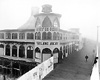
Imagesetter
negative
|
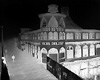
Ink
Jet
negative
|
|
|
|

|
Laser printing equipment is, for
the moment, quite expensive and out of
reach of the home practitioner. The
alternative of preparing full size
negatives for contact printing is not. The
technique is not new - only the way of
making the negatives. The ultimate quality
can be achieved with negatives made by a
competent service bureau using an
imagesetter. These may be used for both
"traditional" silver and "alternative"
prints such as platinum and palladium,
which require high levels of UV light.
A less expensive alternative, with
similar results, involves
Making
Digital
Negatives with Ink
Jet Printers,
which, although excellent for silver
papers normally exposed with an enlarger,
will not work for media requiring high
levels of UV light.
 While
contact prints made from properly made
digital negatives are indistinguishable
from those made by traditional means,
improvement in expressive quality is
limited only by the skill and vision of
the photographer . While
contact prints made from properly made
digital negatives are indistinguishable
from those made by traditional means,
improvement in expressive quality is
limited only by the skill and vision of
the photographer .
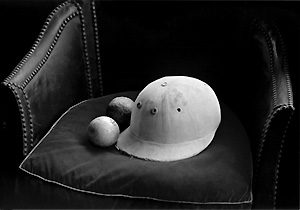
This image of Will Rogers' polo helmet,
underexposed on Adox KB14 film, is an
example of an image that is all but
impossible to print with an enlarger.
Paper selection is critical to get the
leather to look like leather and fabric to
look like fabric. Control of the low AND the high values while
retaining detail and mood is a challenge.
I had only made successful prints with
1980s Oriental Seagull VC paper and
multiple exposures with various filtration
settings. All of the problems associated
with printing this negative are solved
with a digital negative and contact print.
|